Acer saccharum
Sugar Maple
Sugar maple is an iconic North American tree, renowned for its vibrant fall foliage, maple syrup production, and valuable hardwood.
Description
Size
Sugar maples are large deciduous trees, typically growing 70-100 feet tall with a spread of 40-60 feet. They can occasionally grow larger.
Shape
They have a broad, rounded crown and a straight, strong trunk.
Leaves
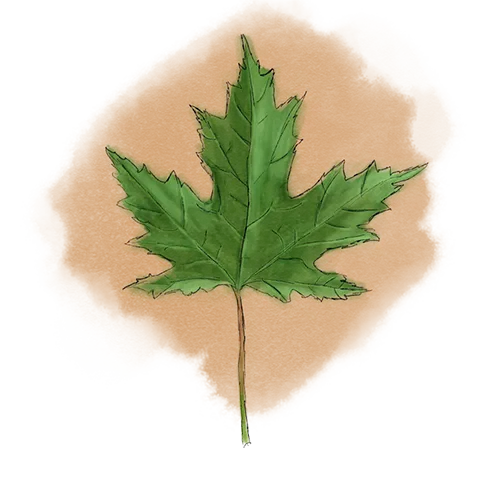
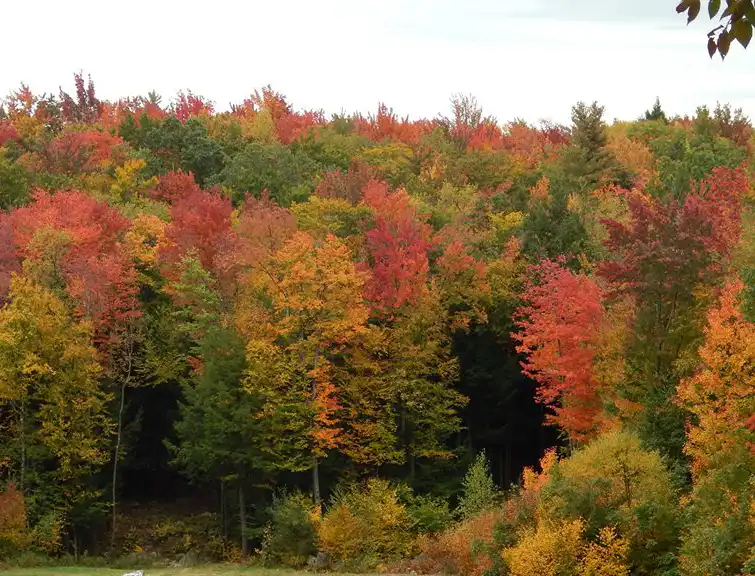
The leaves are 3-5 lobed, with the lobes having toothed edges. They are 3-7 inches wide and turn brilliant shades of yellow, orange, and red in the fall, making them a favorite for autumn scenery.
Bark
The bark is smooth and gray when young, becoming more furrowed and ridged with age.
Flowers
Sugar maples have small, yellowish-green flowers that appear in early spring before the leaves emerge.
Fruit
The fruit is a winged samara (a type of seed), which is dispersed by the wind.
Growing Conditions
Sunlight
Sugar maples prefer full sun to partial shade.
Soil
They thrive in well-drained, moist soil that is slightly acidic to neutral. They prefer loamy soils.
Water
Sugar maples need consistent moisture, especially during dry periods.
Hardines Zones
Sugar maples are hardy in USDA zones 3-8.
Benefits
Fall Color
Sugar maples are famous for their spectacular fall foliage, which is a major tourist attraction in some areas.
Maple Syrup
The sap of sugar maples is used to make maple syrup.
Valuable Wood
The hard, dense wood is used for furniture, flooring, and other woodworking projects.
Shade
Their large canopy provides ample shade.
Potential Drawbacks
Slow Growth
Sugar maples can be slow-growing, especially when young.
Sensitivity to Salt
They are sensitive to salt spray and road salt, so they are not ideal for planting near roads that are salted in winter.
Susceptibility to drought
While they need consistent moisture, they can be susceptible to drought, especially in their first few years.

Acer rubrum
Red Maple
Red maple is a popular and widespread tree species in North America, known for its vibrant fall foliage and adaptability.
Description
Size
Red maples can grow to be 40-60 feet tall, with a similar spread.
Shape
They typically have a rounded or oval crown, though this can vary.
Leaves
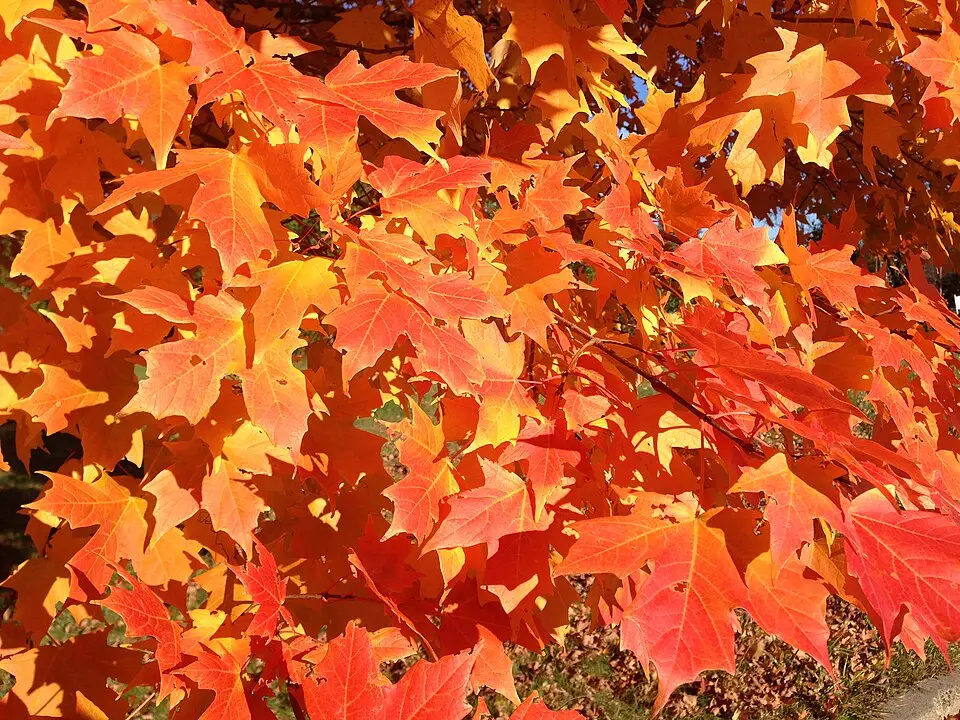
The leaves are 3-5 lobed, with serrated edges, and turn brilliant shades of red, orange, and yellow in the fall.
Bark
The bark is smooth and gray when young, becoming darker and more furrowed with age.
Flowers
Red maples produce small, red flowers in early spring before the leaves emerge.
Fruit
The fruit is a winged samara (a type of seed), which is dispersed by the wind.
Growing Conditions
Sunlight
Red maples prefer full sun to partial shade.
Soil
They are adaptable to a variety of soil types, but prefer moist, well-drained soil.
Water
Red maples need regular watering, especially during dry periods.
Hardines Zones
Red maples are hardy in USDA zones 3-9.
Benefits
Fall Color
Red maples are renowned for their spectacular fall foliage, which can range from bright red to orange and yellow.
Wildlife
The flowers provide nectar for pollinators, and the seeds are eaten by birds and small mammals.
Adaptable
Red maples can tolerate a wide range of growing conditions, including wet and dry soils.
Shade
They provide moderate to dense shade in the summer.
Maple Syrup
Red maples can be tapped for maple syrup, although their sap has a lower sugar content than sugar maples.
Lumber
The wood is used for furniture, flooring, and other products.content than sugar maples.
Potential Drawbacks
Brittle Branches
Red maples have relatively brittle branches that can be susceptible to breakage in storms.
Surface Roots
They can develop surface roots that can crack sidewalks and driveways.
Pests and Diseases
Red maples can be susceptible to a variety of pests and diseases, such as aphids, scale insects, and verticillium wilt.
Juglans nigra
Black Walnut
Black walnut is a valuable and iconic North American species, prized for its delicious nuts, high-quality wood, and striking appearance.
Description
Size
Black walnuts are large deciduous trees, often reaching heights of 70-100 feet with a spread of 50-75 feet. They can occasionally grow even larger.
Shape
They typically have a broad, rounded crown with a straight trunk.
Leaves
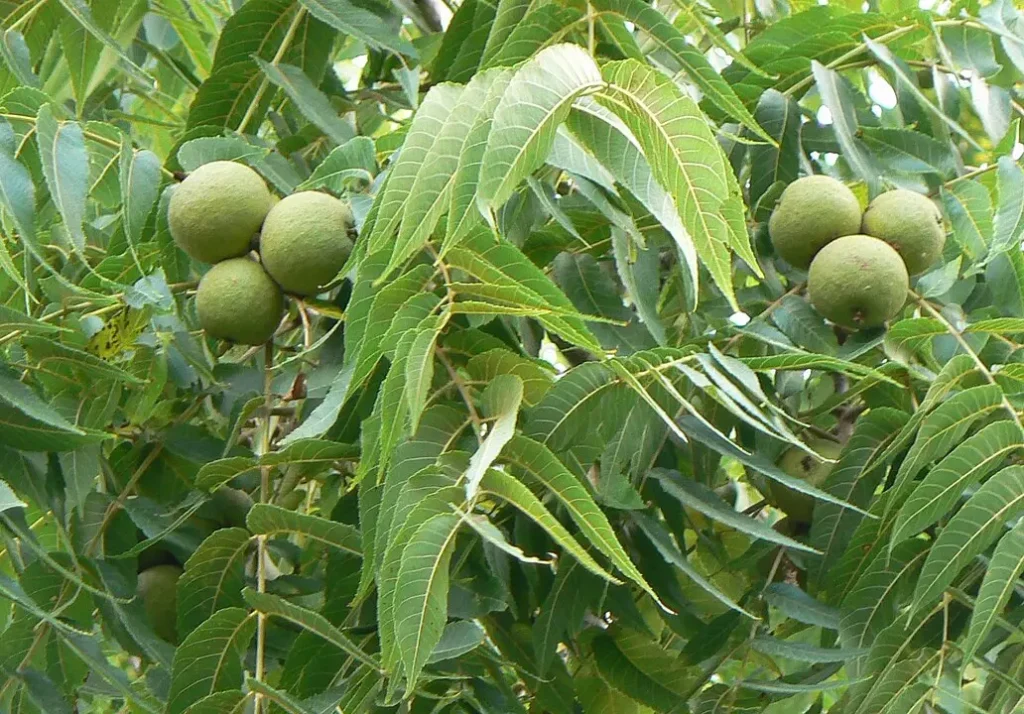
The leaves are pinnately compound, meaning they have multiple leaflets arranged along a central stem. They are 12-24 inches long with 15-23 leaflets, and turn a golden yellow in the fall.
Bark
The bark is dark brown to black, thick, and deeply furrowed, giving it a distinctive, rugged look.
Nuts
Black walnuts are known for their hard, thick-shelled nuts. The nuts are encased in a greenish-yellow husk that turns dark brown or black as it ripens. The kernel inside is rich, oily, and flavorful.
Growing Conditions
Sunlight
Black walnuts prefer full sun but can tolerate some partial shade.
Soil
They thrive in deep, well-drained, fertile soil. They can tolerate a range of soil types, including clay and loam, but prefer neutral to slightly alkaline pH.
Water
Black walnuts are relatively drought-tolerant once established, but they benefit from regular watering, especially during dry periods.
Hardines Zones
Black walnuts are hardy in USDA zones 4-9.
Benefits
Edible Nuts
Black walnuts are a highly nutritious and flavorful nut, enjoyed raw, cooked, or used in baking.
Valuable Wood
The dark, rich-grained wood is prized for furniture, cabinetry, gunstocks, and other woodworking projects.
Shade
Their large canopy provides ample shade.
Wildlife Food
The nuts are a food source for squirrels, deer, and other wildlife.
Potential Drawbacks
Juglone
Black walnuts produce a chemical called juglone, which can be toxic to some plants growing nearby. This can limit the types of plants that can be grown under or near a black walnut tree.
Messy Nuts
Mature trees produce a large number of nuts, which can be messy to clean up.
Slow Growth
Black walnuts can be slow-growing, especially in their early years.
Carya ovata
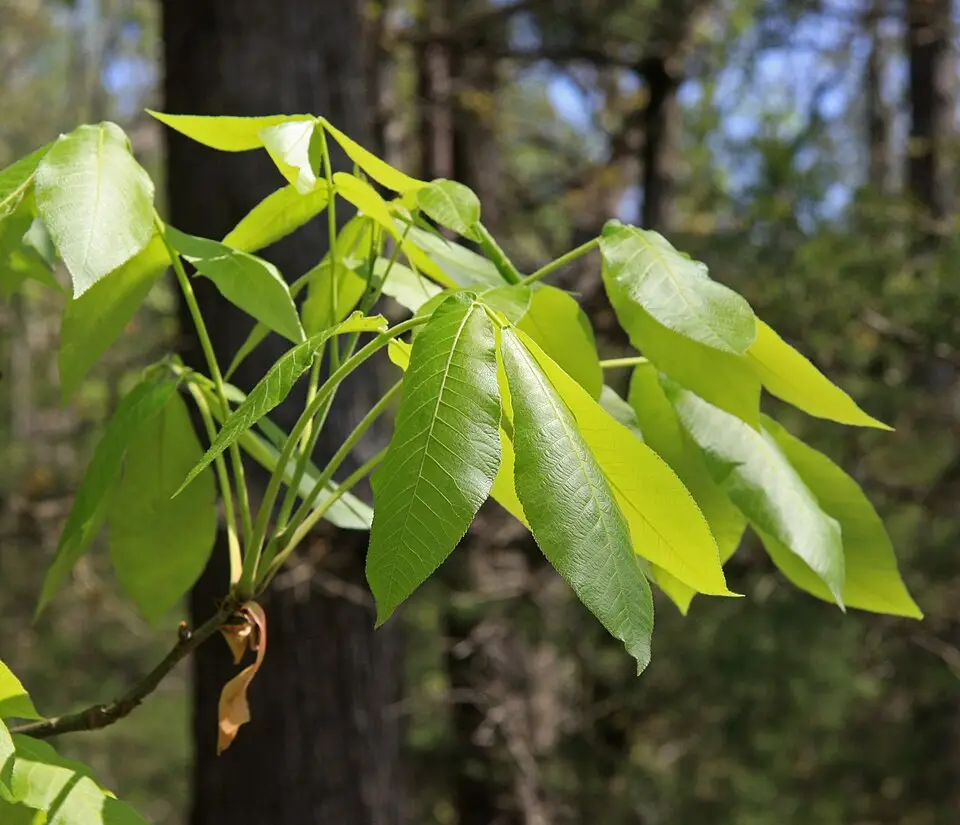
Shagbark Hickory
Shagbark hickory is a distinctive and beautiful native North American species, easily recognized by its shaggy bark and delicious nuts.
Description
Size
Black walnuts are large deciduous trees, often reaching heights of 70-100 feet with a spread of 50-75 feet. They can occasionally grow even larger.
Shape
They typically have a broad, rounded crown with a straight trunk.
Leaves
The leaves are pinnately compound, meaning they have multiple leaflets arranged along a central stem. They are 12-24 inches long with 15-23 leaflets, and turn a golden yellow in the fall.
Bark
The bark is dark brown to black, thick, and deeply furrowed, giving it a distinctive, rugged look.
Nuts
Black walnuts are known for their hard, thick-shelled nuts. The nuts are encased in a greenish-yellow husk that turns dark brown or black as it ripens. The kernel inside is rich, oily, and flavorful.
Growing Conditions
Sunlight
Black walnuts prefer full sun but can tolerate some partial shade.
Soil
They thrive in deep, well-drained, fertile soil. They can tolerate a range of soil types, including clay and loam, but prefer neutral to slightly alkaline pH.
Water
Black walnuts are relatively drought-tolerant once established, but they benefit from regular watering, especially during dry periods.
Hardines Zones
Black walnuts are hardy in USDA zones 4-9.
Benefits
Edible Nuts
Black walnuts are a highly nutritious and flavorful nut, enjoyed raw, cooked, or used in baking.
Valuable Wood
The dark, rich-grained wood is prized for furniture, cabinetry, gunstocks, and other woodworking projects.
Shade
Their large canopy provides ample shade.
Wildlife Food
The nuts are a food source for squirrels, deer, and other wildlife.
Potential Drawbacks
Late to Bear Fruit
They can take 10-20 years or more to start producing nuts.
Messy Nuts
Mature trees produce a large number of nuts, which can be messy to clean up.
Slow Growth
Black walnuts can be slow-growing, especially in their early years.
Quercus macrocarpa
Bur Oak
Bur oak is a majestic and long-lived oak species native to central and eastern North America. It's known for its impressive size, drought tolerance, and distinctive acorns.
Description
Size
Bur oaks are large trees, often reaching heights of 70-100 feet, and sometimes even exceeding 150 feet. They can have a spread of similar dimensions.
Shape
They typically have a broad, spreading crown, becoming more rounded with age. Their lower branches often extend outwards significantly.
Leaves
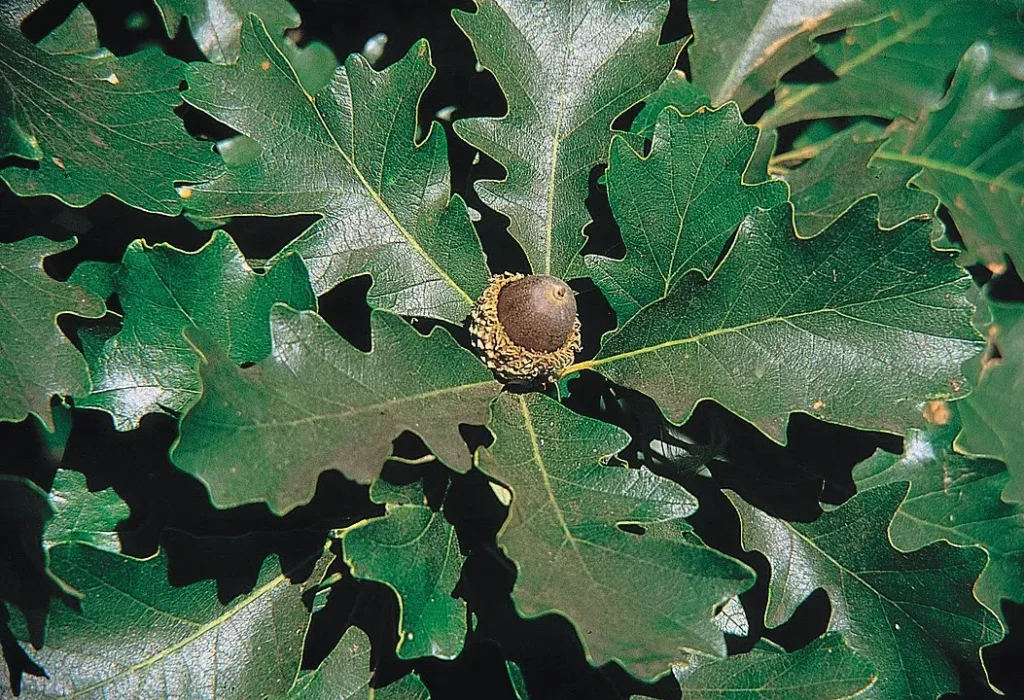
The leaves are large, 6-12 inches long, and have 5-7 deeply lobed sections. They are dark green on top and paler underneath, turning a yellowish-brown to brown in the fall. They tend to stay on the tree longer than some other oaks.
Bark
The bark is thick, gray-brown, and deeply furrowed, giving it a rugged appearance.
Acorns
Bur oak acorns are the largest of any North American oak. They are 1-2 inches long and have a distinctive, fringed cup that covers nearly half of the nut.
Growing Conditions
Sunlight
Bur oaks thrive in full sun.
Soil
They are adaptable to a variety of soil types, including clay, loam, and sandy soils. They are particularly drought-tolerant and can handle drier conditions.
Water
While drought-tolerant once established, young bur oaks benefit from regular watering.
Hardines Zones
Bur oaks are hardy in USDA zones 3-8.
Benefits
Drought Tolerance
They are exceptionally drought-tolerant, making them suitable for drier climates.
Longevity
Bur oaks are known for their long lifespan, often living for several centuries
Shade
Their large canopy provides ample shade.
Wildlife
The large acorns are a valuable food source for various wildlife, including squirrels, deer, and turkeys.
Impressive Appearence
Their size and distinctive bark make them a striking landscape tree.
Potential Drawbacks
Large Size
Their mature size can make them unsuitable for smaller properties.
Acorn Drop
Mature trees produce a large number of acorns, which can be messy.
Slow Growth
Compared to some other oaks, bur oaks are relatively slow-growing, especially when young.
Quercus palustris
Pin Oak
Pin oak is a large deciduous tree known for its distinctive branching pattern, fast growth, and vibrant fall foliage.
Description
Size
Pin oaks can grow up to 70-90 feet tall with a spread of 40-70 feet.
Shape
They have a pyramidal shape when young, becoming more rounded with age.
Leaves
The leaves are 3-5 inches long with 5-7 lobes, each with bristle tips. They turn a deep scarlet red in the fall.
Bark
The bark is smooth and gray-brown when young, becoming darker and more furrowed with age.
Acorns
The acorns are small, about 1/2 inch long, and have a shallow cup.
Growing Conditions
Sunlight
Pin oaks prefer full sun but can tolerate some shade.
Soil
They grow best in moist, acidic soil that is well-drained.
Water
Pin oaks need regular watering, especially during dry periods.
Hardines Zones
Pin oaks are hardy in USDA zones 4-8.
Benefits
Fall Color
The leaves turn a beautiful scarlet red in the fall.
Fast Growth
Pin oaks grow faster than many other oak species.
Shade
Pin oaks provide dense shade in the summer.
Wildlife
The acorns are a food source for many animals, including squirrels, deer, and birds.
Adaptable
Pin oaks can tolerate a variety of soil conditions, including wet and compacted soils.
Potential Drawbacks
Messy
Pin oaks can be messy, dropping acorns, leaves, and twigs.
Iron Chlorosis
Pin oaks are susceptible to iron chlorosis, a condition that causes the leaves to turn yellow. This can be treated with iron supplements.
Pests & Diseases
Pin oaks can be susceptible to a variety of pests and diseases, such as oak wilt, anthracnose, and leaf miners.
Quercus coccinea or Quercus rubra
Red Oak
Red oak is a majestic and popular choice for landscapes, known for their vibrant fall color and relatively fast growth rate for an oak.
Description
Size
Red oaks are large trees, typically reaching heights of 60-90 feet, with a spread of 40-70 feet. They can occasionally grow larger.
Shape
They have a broad, rounded crown with a strong central trunk.
Leaves
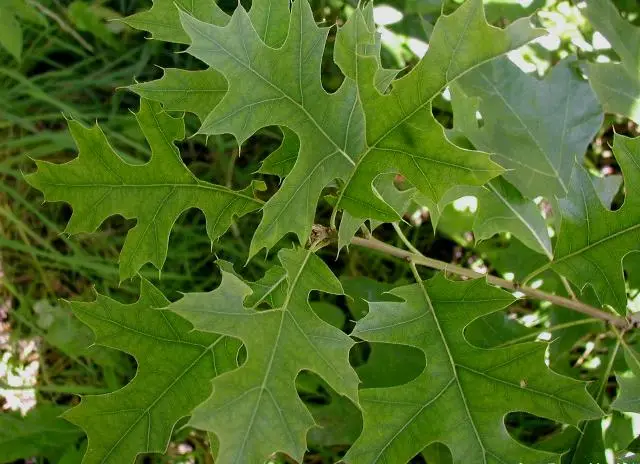
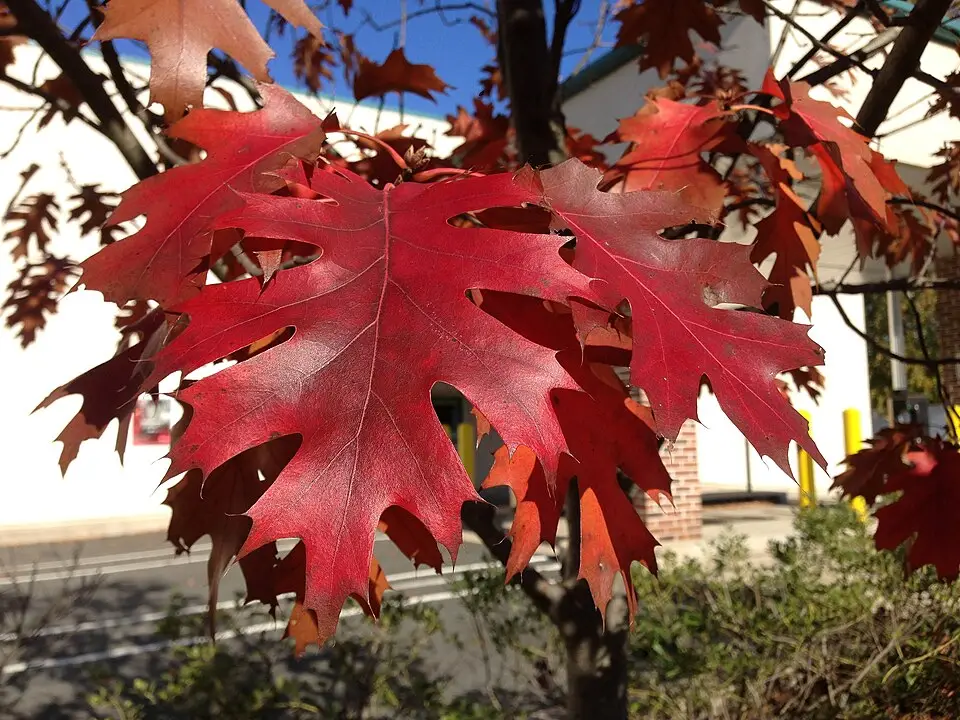
The leaves are 5-9 inches long with 7-9 pointed lobes, each with bristle tips. They are a deep, glossy green in the summer, turning a brilliant red, orange, or sometimes yellowish-brown in the fall. The fall color is often more reliable and vibrant on Quercus coccinea (scarlet oak)
Bark
The bark is dark gray and smooth when young, becoming more furrowed and ridged with age. It often has a reddish tinge to it.
Acorns
Red oak acorns are about 1 inch long, oval-shaped, and have a shallow, saucer-shaped cup that covers about 1/4 of the nut.
Growing Conditions
Sunlight
Red oaks prefer full sun but can tolerate some partial shade.
Soil
They grow best in well-drained, slightly acidic soil. They are more tolerant of a variety of soil types than some other oaks.
Water
Young red oaks need regular watering, especially during dry periods. Once established, they are relatively drought-tolerant.
Hardines Zones
Red oaks are hardy in USDA zones 3-8 (depending on the specific species).
Benefits
Fall Color
Their fall foliage is a major attraction, providing vibrant reds and oranges.
FAST GROWTH (for an oak)
Red oaks are among the faster-growing oak species.
Strong Wood
Red oak wood is strong and durable, though not as rot-resistant as white oak.
Wildlife
The acorns are an important food source for many animals.
Shade
Their large canopy provides ample shade.
Potential Drawbacks
Pointed Lobes
The pointed lobes and bristle tips of the leaves can make them a bit more prickly to handle than some other oaks.
Susceptibility to Oak Wilt
Red oaks are more susceptible to oak wilt, a fungal disease, than some other oaks.
Large Size
Their mature size can make them unsuitable for smaller properties.
Acorn Drop
Mature trees produce a large number of acorns, which can be messy.

Quercus alba
White Oak
White oak is a majestic and long-lived member of the oak family, native to eastern and central North America. White oaks are valued for their strong wood, beautiful fall foliage, and stately presence.
Description
Size
White oaks are large trees, typically reaching heights of 80-100 feet, with a spread of 50-80 feet. They can sometimes grow even larger.
Shape
They have a broad, spreading crown with sturdy branches. The overall shape can be rounded or irregular.
Leaves
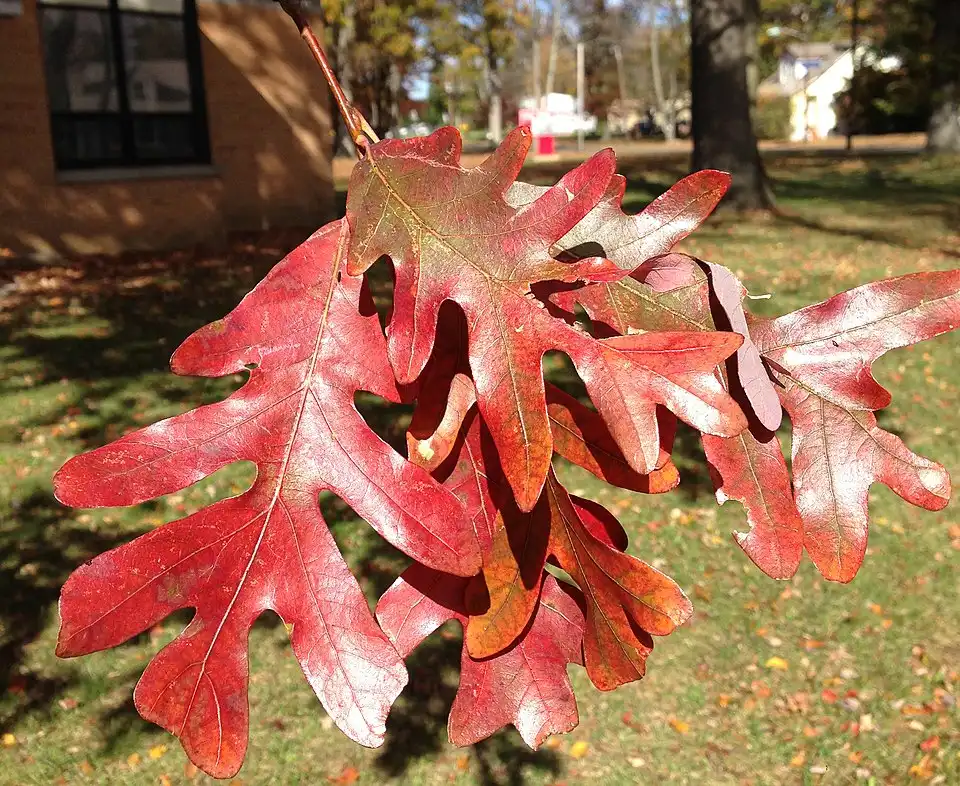
The leaves are 5-9 inches long with 7-9 rounded lobes. They are a light green color in the spring and summer, turning a beautiful reddish-purple to brown in the fall. They often persist on the tree through much of the winter, especially on younger trees.
Bark
The bark is light gray and relatively smooth when young, becoming more fissured and scaly with age. It has a distinctive, almost plate-like appearance.
Acorns
White oak acorns are about 3⁄4 inch long, oval-shaped, and have a shallow cup that covers about 1⁄4 of the nut. They are an important food source for wildlife.
Growing Conditions
Sunlight
White oaks prefer full sun but can tolerate some partial shade.
Soil
They thrive in deep, well-drained, slightly acidic soil. While adaptable, they prefer loamy soils.
Water
Young white oaks need regular watering, especially during dry periods. Once established, they are relatively drought-tolerant.
Hardines Zones
White oaks are hardy in USDA zones 3-9.
Benefits
Beautiful Fall Color
The leaves turn a striking reddish-purple in the fall.
Longevity
White oaks are known for their long lifespan, often living for several centuries.
Strong Wood
White oak wood is dense, strong, and durable, making it highly valued for furniture, flooring, shipbuilding, and barrels.
Wildlife
The acorns are a vital food source for many animals, including deer, squirrels, turkeys, and birds.
Shade
Their large canopy provides ample shade.
Potential Drawbacks
Slow Growth
White oaks are relatively slow-growing, especially when young.
Large Size
Their mature size can make them unsuitable for smaller properties.
Acorn Drop
Mature trees produce a large number of acorns, which can be messy.